Compression Recovery Boots have become a familiar sight in gyms, training rooms, and professional sports facilities. These inflatable leg sleeves use air-filled chambers to apply gentle, sequential pressure. The sensation resembles a firm massage moving from the ankles toward the thighs. Many users wear them after long runs, intense strength sessions, or hours spent standing. The routine often feels calming.
Their proposed purpose is simple. Compression may support temporary fluid movement and improve the feeling of heavy, tired legs. Some studies report short-term benefits for perceived soreness or recovery comfort. However, results vary between individuals and activities. These boots are not a guaranteed shortcut to better performance. They cannot replace sleep, adequate nutrition, hydration, or a sensible training plan.
This article explains why people use Compression Recovery Boots and what the evidence can reasonably support. It also considers practical details, including session timing, pressure settings, and comfort. A trained clinician or sports medicine professional should guide anyone with circulation problems, unexplained swelling, skin injuries, or significant medical conditions. Safety matters more than chasing stronger pressure. More pressure is not always better. The research is promising in places, but the picture is not perfectly settled. Personal experience can be useful, yet it should not be mistaken for medical proof. Used thoughtfully, these boots may offer a convenient recovery ritual. Their real value depends on the person, the goal, and the wider recovery routine.
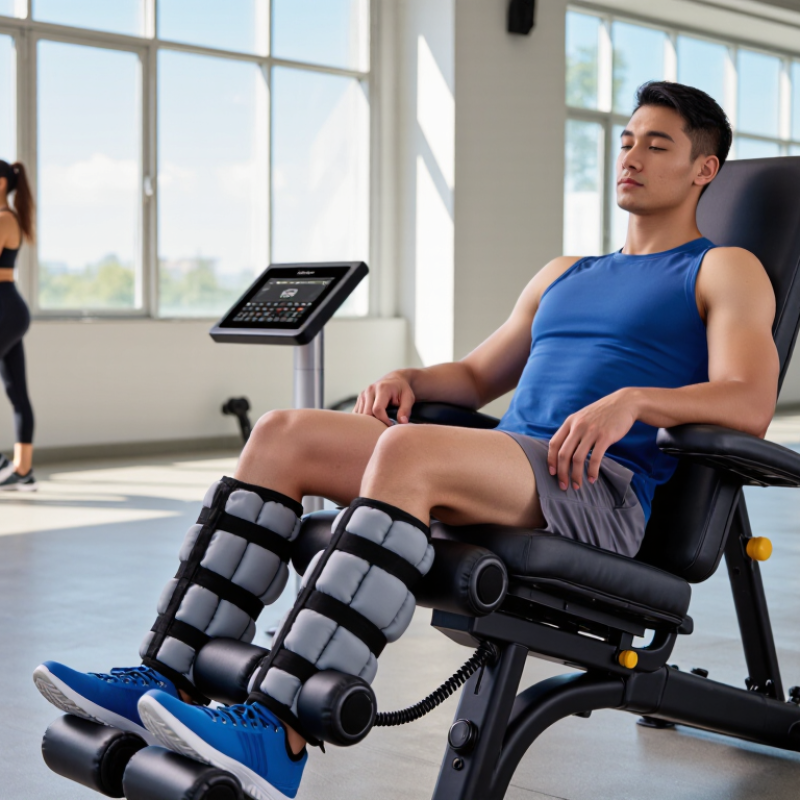
Why Use Compression Recovery Boots?
Compression recovery boots use inflatable chambers that wrap around the legs. Most systems contain four to eight chambers. Each chamber fills and releases in sequence, usually from the feet upward. This pattern may support venous return and reduce the heavy feeling after training or long periods of standing.
Pressure is personal. Settings commonly range from 20 to 80 mmHg, but higher pressure is not automatically better. Lower settings may feel comfortable after light exercise, while trained users sometimes prefer stronger compression. A qualified clinician or sports therapist can help match pressure to circulation, sensitivity, and recovery goals. Fit matters. The sleeves should feel firm without causing numbness, sharp pain, or skin color changes.
In practical use, a session may last 20 to 40 minutes while sitting with the legs supported. Some people notice less tightness in the calves afterward. Others notice little change, especially after severe soreness or dehydration. Not every session helps. Research suggests possible benefits for perceived recovery, but results are not identical across users or studies. Anyone with suspected blood clots, significant vascular disease, uncontrolled heart problems, open wounds, or reduced sensation should seek medical advice before using compression equipment. Even healthy athletes should stop when symptoms feel unusual and reassess the pressure.
Compression recovery boots use sequential pneumatic inflation to apply pressure around the legs. Common systems contain 4–8 chambers and offer adjustable pressure settings within approximately 20–80 mmHg.
Each bar represents the stated adjustable pressure range for a boot configuration with 4, 6, or 8 chambers. More chambers can divide compression into more zones, while the appropriate pressure depends on comfort, intended use, and professional guidance.
Why Use Compression Recovery Boots?
How Sequential Inflation Promotes Venous Return and Interstitial Fluid Movement
Compression recovery boots use inflatable chambers that fill in sequence, usually from the foot toward the thigh. This pattern creates a temporary pressure gradient along the limb. It can assist venous blood as it moves upward against gravity, especially after prolonged sitting, standing, or exercise. The pressure may also encourage interstitial fluid toward lymphatic and venous pathways. It feels like a slow, traveling squeeze.
The effect is mechanical, not magical. When a chamber inflates, it gently compresses soft tissue and superficial veins. Valves inside healthy veins help limit backward flow. As the chamber releases, tissues can refill briefly before the next cycle begins. Some users notice lighter legs or reduced tightness afterward. Evidence is more consistent for short-term comfort and swelling management than for faster muscle repair. Individual responses vary.
Clinical screening still matters. People with suspected deep-vein thrombosis, significant arterial disease, uncontrolled heart failure, or active skin infection should seek medical advice before using compression. Incorrect pressure or poor fit can cause numbness, pain, or skin irritation. More pressure is not automatically better. A therapist or clinician can help select timing, pressure, and session length based on symptoms and medical history. The response may be subtle, and that is worth noticing rather than ignoring.
Compression recovery boots are often used after hard training to reduce swelling and leg heaviness. Their sleeves inflate in sections, applying rhythmic pressure from the feet upward. That mechanism sounds convincing. Yet the useful question is measurable: do users move better, hurt less, or recover sooner?
Research commonly tracks muscle soreness, range of motion, and recovery across 24 to 72 hours. Soreness is usually recorded with a rating scale, often before and after exercise. Range of motion may reveal stiffness that athletes underestimate. Small improvements can matter when stairs feel tight or a squat becomes uncomfortable. Findings are mixed. Some studies report lower perceived soreness, while others find little difference from passive rest. That inconsistency may reflect pressure settings, timing, training load, and individual response.
A sensible trial uses the boots at the same post-training time for several sessions. Record soreness at 24, 48, and 72 hours. Measure a simple movement, such as knee bend, before judging the result. Keep sleep, hydration, and training volume visible. Otherwise, the boots may receive credit for recovery caused by rest. Comfort is not proof. Research also does not show that compression replaces gradual loading, adequate food, or medical assessment. If pain is sharp, persistent, or linked with swelling, professional evaluation is more appropriate. I would stay cautious here.
Research commonly evaluates intermittent pneumatic compression through subjective soreness ratings, joint mobility, swelling, blood markers, and short-term performance tests. Results are generally outcome-specific rather than universally conclusive.
| Research Dimension | Common Measurement | Typical Assessment Window | What the Evidence Generally Shows | Evidence Signal | Practical Meaning |
|---|---|---|---|---|---|
| Muscle soreness | 0–10 visual analogue scale or numerical rating scale; participants report tenderness or perceived soreness. | Immediately after exercise, then approximately 24, 48, and 72 hours later. | Compression may reduce perceived soreness in some protocols, particularly during the first 24–48 hours. Effects are usually modest and vary with exercise type, compression settings, and participant training status. | Mixed to modest | May improve comfort after demanding training, but should not be treated as a guaranteed reduction in delayed-onset muscle soreness. |
| Range of motion | Goniometer or digital inclinometer measurements of the affected joint, often compared with the pre-exercise baseline. | Immediately after exercise and at 24–72 hours. | Some studies report less temporary loss of mobility after compression. Improvements are not consistently large enough to demonstrate a clear advantage across all exercise models. | Potential benefit | Useful as a mobility-recovery outcome, especially when stiffness is a primary concern. |
| Perceived recovery | Likert-scale or numerical ratings such as “not recovered” to “fully recovered.” | Immediately after treatment and during the following 24–72 hours. | Participants often report feeling better after compression sessions. Subjective improvements can occur even when objective performance tests show little or no change. | More consistent | May support readiness and comfort, while perceived recovery should be interpreted separately from physiological recovery. |
| Repeated-sprint or repeated-effort performance | Total work, peak power, sprint time, repetition quality, or fatigue index during a second exercise bout. | Several hours after exercise or at 24 hours; some studies extend testing to 48–72 hours. | Findings are inconsistent. Compression does not reliably restore performance to baseline in every study, although small benefits may appear after particularly strenuous or repeated exercise. | Inconsistent | Performance restoration should be tested directly rather than inferred from reduced soreness. |
| Strength recovery | Isometric or dynamic maximum voluntary contraction, often expressed as a percentage of baseline. | Immediately after exercise and at 24, 48, and 72 hours. | Some protocols show a smaller decline or faster return of strength, but results differ by muscle group, exercise damage, treatment duration, and comparator condition. | Mixed | May be relevant after heavy resistance training, but evidence does not support a universal strength-recovery effect. |
| Jump performance | Countermovement-jump height, peak power, or reactive strength index. | Usually at baseline, immediately post-exercise, and 24–72 hours later. | Jump metrics are sensitive to fatigue, but compression-related improvements are variable. A higher subjective recovery score does not necessarily produce better jump height. | Mixed | Helpful for monitoring recovery, but should be combined with soreness and readiness data. |
| Limb swelling and circumference | Tape-measured limb circumference, volumetric displacement, ultrasound, or tissue-fluid assessment. | Before treatment, immediately after treatment, and during the next 24 hours. | Intermittent pneumatic compression has a well-established physiological effect on venous and lymphatic fluid movement. The strongest rationale is for temporary fluid-shift and swelling management rather than guaranteed muscle repair. | Established mechanism | Most relevant when heaviness, transient swelling, or prolonged standing contributes to discomfort. |
| Blood markers of muscle damage | Creatine kinase, myoglobin, inflammatory markers, and related laboratory measures. | Commonly measured at baseline, 24, 48, and 72 hours. | Laboratory markers often show high individual variability and do not consistently improve with compression. Changes in blood markers should not be equated directly with pain or functional recovery. | Limited and variable | Useful for research, but less practical than symptoms and performance for everyday training decisions. |
| Heart rate and autonomic recovery | Resting heart rate, heart-rate variability, and occasionally blood pressure. | During recovery and before the next exercise session, often within 24 hours. | These measures are not consistently improved by a single compression session. Hydration, sleep, stress, nutrition, and training load may have larger effects. | Insufficiently consistent | Use as general recovery indicators rather than as primary evidence for compression effectiveness. |
Compression recovery boots use gentle, sequential pressure around the legs. The pressure may support fluid movement and reduce the heavy feeling after demanding activity. They are not a replacement for sleep, food, or medical care. However, they can fit comfortably into a recovery routine.
The most practical window is 20–60 minutes after training or competition. This timing gives your body a quiet transition after intense movement. I usually begin with a lower pressure setting and sit with my legs supported. The sleeves should feel secure, not painful, numb, or excessively tight. Keep the session comfortable.
After long travel, the same 20–60-minute window can help relieve temporary leg fatigue. A short walk, water, and gentle movement may work well alongside the boots. Avoid using them over injured skin or unexplained swelling. People with circulation conditions should ask a qualified healthcare professional first.
I once assumed stronger pressure meant faster recovery. That assumption was too simple. More pressure can feel uncomfortable and may distract from the intended benefit. Personal response varies, and one session cannot prove much. Recording how your legs feel before and after use can provide more useful feedback. Stop if you notice sharp pain, tingling, skin changes, or unusual discomfort.
Compression recovery boots can gently inflate around the legs, encouraging fluid movement after training or prolonged sitting. Yet comfort is not proof of safety. The wrong pressure can conceal a serious problem. Before use, check symptoms, medical history, and circulation status with a qualified clinician. This step feels slower. It matters.
Do not use them when deep vein thrombosis, or DVT, is suspected or confirmed. Warning signs include one-sided swelling, warmth, redness, tenderness, or sudden calf pain. Unexplained breathlessness or chest pain needs emergency medical attention, not compression. A clot can potentially dislodge, and external pressure may complicate assessment. Do not massage the area either.
People with peripheral arterial disease, severe circulation impairment, or ischemic pain should avoid these devices unless prescribed. Poor arterial flow may leave toes cold, pale, blue, numb, or slow to heal. Active skin infection, cellulitis, fever, draining wounds, or spreading redness also requires medical care first. In practice, users sometimes mistake tightness for effectiveness. I have found that assumption unreliable. Pressure should never cause numbness, sharp pain, color change, or worsening symptoms. A clinician may review pulses, skin condition, ankle-brachial index, medications, and heart history before recommending use. Even then, settings and session length may need adjustment. Stop immediately if symptoms change.
Use them 20–60 minutes after training, competition, or long travel. Sit quietly with your legs supported. Start gently.
The sleeves should feel secure, not painful or excessively tight. Stop if you notice numbness, tingling, sharp pain, or skin color changes. More pressure is not always better.
They may ease temporary leg heaviness after prolonged sitting. Combine use with a short walk, water, and gentle movement. Do not ignore unusual swelling.
Avoid using them over injured skin, draining wounds, active infection, or unexplained swelling. The device may hide changes that need medical attention.
People with suspected or confirmed deep vein thrombosis should not use them. Possible signs include one-sided swelling, warmth, redness, tenderness, or sudden calf pain.
Sudden breathlessness or chest pain requires emergency medical attention. Do not use compression while waiting. It is not a substitute for evaluation.
People with peripheral arterial disease or severe circulation problems should ask a qualified clinician first. Cold, pale, blue, numb, or slow-healing toes need careful assessment.
Note how your legs feel before and after each session. Track heaviness, comfort, swelling, and skin changes. One session proves very little. My earlier assumption was wrong: stronger pressure did not guarantee better recovery.
Compression Recovery Boots are wearable pneumatic sleeves designed to support post-exercise recovery. They typically contain four to eight chambers that inflate in sequence, applying adjustable pressure of approximately 20–80 mmHg from the feet upward. This rhythmic compression may encourage venous return and help move excess interstitial fluid, potentially reducing feelings of heaviness and temporary swelling. Research on these devices commonly examines outcomes such as muscle soreness, range of motion, and perceived recovery during the following 24–72 hours.
For many active people, Compression Recovery Boots may be used for 20–60 minutes after training, competition, or long-distance travel. Their effects can vary depending on the activity, timing, pressure setting, and individual response, so they should complement rather than replace sleep, hydration, nutrition, and appropriate medical care. People with suspected or diagnosed thrombosis, significant arterial disease, active skin or soft-tissue infection, or other circulation-related conditions should avoid compression unless a qualified healthcare professional specifically approves it.

KONBEST