Choosing China’s top Compressor Boot suppliers requires more than comparing prices, catalogs, or polished factory websites. A reliable supplier must understand compressor vibration, heat exposure, oil contact, and long-term mechanical stress. The boot should fit tightly without tearing during installation. Its rubber compound must remain flexible after repeated temperature changes. Small details matter.
W. Edwards Deming, a respected quality-management authority, said, “Quality comes not from inspection, but from the improvement of the production process.” This principle applies directly to Compressor Boot sourcing. Ask how the supplier controls rubber mixing, mold temperature, dimensional accuracy, and final inspection. Request material specifications, test reports, production photos, and traceable batch records. ISO 9001 certification can support credibility, but it cannot replace practical verification.
A serious evaluation should include samples from different production batches. Measure wall thickness, mounting diameter, hardness, and resistance to heat and oil. Test the boot beside the actual compressor, not only on a factory workbench. Confirm packaging quality, replacement policies, communication speed, and export experience. A supplier may offer an attractive quotation yet use inconsistent materials. That risk is easy to underestimate.
There is no perfect checklist. Even experienced buyers can miss a hidden weakness. A factory visit, independent inspection, or small trial order may reveal more than a long sales presentation. The strongest China Compressor Boot supplier combines stable manufacturing, responsive engineering support, transparent documentation, and realistic delivery promises. Reliability is demonstrated over time. Not claimed in advertisements.
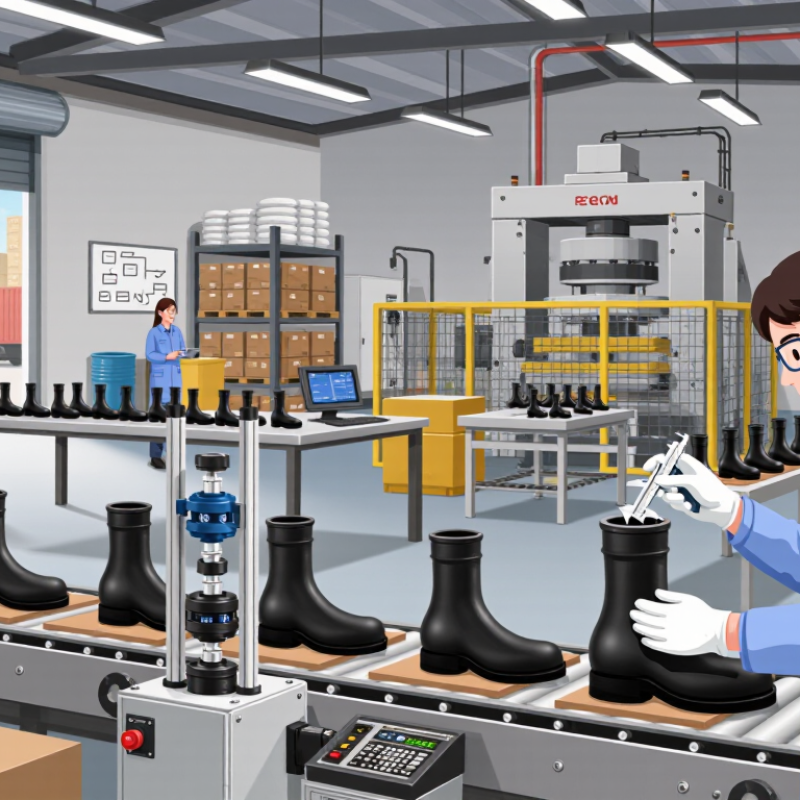
Compressor boots are molded or extruded rubber covers for compressor fittings, hoses, and vibration points. They protect against dust, moisture, abrasion, and accidental contact. In refrigeration and industrial equipment, a well-fitted boot can also reduce movement around a connection. The opening should grip firmly without cutting the rubber. Small gaps matter.
Common materials include EPDM, NBR, neoprene, silicone, and FKM. EPDM performs well against weather, water, and ozone. NBR suits many oil-contact applications. Silicone tolerates wide temperatures but may resist abrasion poorly. FKM offers strong chemical and heat resistance, often at a higher cost. Material selection by price alone is a common mistake. I have inspected samples that looked excellent but hardened after repeated heat exposure. Real service conditions matter more than appearance.
ASTM D2000 identifies rubber compounds by type and grade, with requirements for heat resistance, tensile strength, elongation, and compression set. Additional suffixes can specify oil, ozone, flame, or low-temperature performance. A reliable supplier should provide the full ASTM callout, material data, batch traceability, and dimensional inspection records. Ask for samples from actual production tooling, not only polished prototypes.
Tips: Check wall thickness at corners. Test compression after heat aging. Confirm hardness with several readings. Request photographs of molds and inspection equipment. A factory may claim compliance, but independent verification is still worthwhile.
How to Choose China Top Compressor Boot Suppliers?
When evaluating Chinese compressor boot suppliers, certificates should be verified, not merely displayed. The ISO Survey 2022 recorded more than 1.2 million ISO 9001 certificates worldwide. That figure shows broad adoption, but it does not guarantee reliable rubber parts. Request the certificate number, issuing body, scope, and expiry date. Confirm them through the certification body's online register. Check whether the scope covers automotive components or molded sealing products.
IATF 16949 deserves closer attention for vehicle applications. It requires process control, traceability, risk analysis, and corrective actions. Ask for a control plan, PPAP samples, material batch records, and recent audit findings. A supplier should explain how it controls compression set, ozone resistance, and dimensional variation. Small details matter. I have seen certificates pass review while production records remained incomplete.
RoHS and REACH evidence must match the actual boot compound, pigment, and adhesive. Ask for recent laboratory reports, declarations, and supplier material statements. ECHA enforcement projects have reported roughly 18% non-compliance among inspected products in some substance-restriction checks. That is a useful warning, not a verdict on every supplier. Test samples independently for restricted substances, especially when recycled material is used. A perfect document package can still hide inconsistent batches. Suppliers willing to disclose limitations often deserve more trust than those promising flawless compliance.
| Quality Dimension | What to Check | Acceptable Evidence | Recommended Verification Method | Risk Level if Missing |
|---|---|---|---|---|
| ISO 9001 Quality Management System | Confirm that the supplier operates a documented quality management system covering purchasing, production, inspection, corrective actions, and customer complaints. | Valid certificate showing the legal entity, certified site, certification scope, issue date, expiry date, and accredited certification body. | Check the certificate directly with the certification body or its public certificate database. Confirm that the listed site manufactures or controls compressor boots. | High |
| IATF 16949 Automotive Quality System | Evaluate automotive-specific controls such as process risk analysis, traceability, production part approval, defect prevention, and supplier management. | Current IATF 16949 certificate and clearly defined manufacturing scope. Supporting documents may include process audits, control plans, and automotive customer requirements. | Verify the certificate through the IATF-recognized certification structure and review the latest audit findings or major nonconformity status where disclosure is permitted. | High |
| RoHS Compliance | Determine whether the rubber compound, additives, pigments, coatings, metal inserts, and packaging contain restricted substances above applicable limits. | Recent material declarations, supplier declarations, and laboratory test reports using recognized analytical methods such as XRF screening and, when necessary, chemical confirmation tests. | Match the test report to the exact material grade and part number. Check sample date, laboratory identification, test scope, and restricted-substance results. | Medium–High |
| REACH Compliance | Check for substances of very high concern and other applicable chemical obligations affecting rubber, plasticizers, colorants, adhesives, and surface treatments. | Material declaration identifying applicable substances, concentration information where required, and supporting laboratory reports for relevant materials. | Compare the declaration with the latest applicable candidate-list requirements and obtain updated confirmation when formulations or regulatory lists change. | Medium–High |
| Material and Compound Control | Review control of rubber type, hardness, tensile strength, elongation, compression set, temperature resistance, and resistance to oil or other operating fluids. | Approved material specifications, compound formulation control, incoming inspection records, batch identification, and test results linked to production lots. | Request samples from multiple production lots and compare test results with the approved specification and technical drawing. | High |
| Dimensional Accuracy | Confirm critical dimensions, wall thickness, sealing lips, grooves, mounting features, and tolerances against the approved drawing. | Inspection standards, calibrated gauges, first-article inspection reports, capability studies, and measurement records. | Use independent measurement or a third-party pre-shipment inspection. Pay special attention to sealing and assembly interfaces. | High |
| Production Process Control | Assess molding, curing or vulcanization, trimming, assembly, cleaning, and packaging controls for repeatability and contamination prevention. | Process flow chart, PFMEA, control plan, work instructions, machine maintenance records, and in-process inspection data. | Conduct a remote or on-site process audit and compare actual operations with documented procedures. | Medium–High |
| Testing and Laboratory Capability | Check whether the supplier can perform or arrange tests for hardness, tensile properties, aging, compression set, fluid resistance, leakage, and dimensional stability. | Equipment list, calibration certificates, test procedures, technician records, and complete reports with acceptance criteria. | Review raw data and calibration status. For critical applications, use an independent laboratory for validation testing. | Medium–High |
| Traceability and Change Management | Verify that material batches, production dates, molds, operators, inspection results, and shipment records can be traced. | Lot codes, production records, retention samples, change-control procedures, and documented customer notification rules. | Select a finished part and trace it backward to the material batch and process records during an audit. | High |
| Final Inspection and Packaging | Check appearance, flash, tears, deformation, contamination, labeling, quantity, packaging protection, and storage conditions. | Final inspection checklist, sampling plan, nonconformance records, product labels, and packaging specifications. | Define acceptance criteria in the purchase order and perform pre-shipment inspection using an agreed sampling standard. | Medium |
| Corrective Action and Customer Support | Evaluate response time, root-cause analysis, containment, corrective action, effectiveness verification, and warranty handling. | Completed corrective-action reports using a structured method such as 8D, with evidence that actions were implemented and verified. | Review anonymized historical cases and include response deadlines and replacement responsibilities in the supplier agreement. | Medium |
| Supplier Selection Score | Use a weighted evaluation rather than relying on certificates alone. | Suggested weighting: certification and compliance 25%, material and product testing 25%, process control 20%, traceability 15%, delivery and corrective action 15%. | Approve suppliers only after document review, sample evaluation, risk assessment, and—where practical—an on-site or third-party audit. | Control Point |
When choosing China’s top compressor boot suppliers, compare rubber data before comparing prices. Shore A hardness shows resistance to indentation. A Shore A 70 compound feels firm, but hardness alone cannot confirm durability. Ask whether the test used a calibrated durometer and controlled temperature. Small testing differences can change the result.
Tensile strength measures how much pulling force the rubber withstands before breaking. Elongation shows how far it stretches. These values matter when a boot bends around a compressor fitting or faces vibration during operation. Request test results for the exact compound, not a similar catalog sample. Check the testing date, sample thickness, test method, and laboratory details. A clean datasheet may still hide inconsistent batches. I have seen suppliers provide impressive numbers that changed after production. That is worth questioning.
Tips: Request three samples from different batches. Measure Shore A at several points. Compare the average, not one convenient reading. Review tensile strength and elongation together. High tensile strength with very low elongation may indicate a stiff compound. Excessive elongation may suggest poor resistance to permanent deformation. Ask for aging results after heat and ozone exposure, when relevant. A supplier who explains limits clearly is often more reliable than one promising perfect performance. I would also repeat key tests independently, because one test can be wrong.
When choosing China’s top compressor boot suppliers, inspect test evidence before comparing prices. ISO 1817 evaluates rubber resistance to liquids through volume, mass, hardness, and tensile changes. It does not provide one universal pass-or-fail limit. The buyer must define acceptable changes for the application.
Ask for original ISO 1817 reports using the actual compressor oil, not only a generic reference fluid. Check immersion temperature, exposure duration, specimen dimensions, and pre-test conditioning. A reliable report should show before-and-after values clearly. For example, a 25% volume increase may cause clamping problems, even when the boot still looks intact. Appearance can mislead.
Temperature ratings need equal scrutiny. Separate continuous temperature from short-term peak temperature. Confirm the compound, reinforcement, wall thickness, and aging method behind each rating. The U.S. Department of Energy’s Improving Compressed Air System Performance sourcebook reports that leakage can waste 20–30% of compressor output, showing why small sealing failures deserve attention. It is not a boot-specific study, but the risk is relevant. Ask suppliers for heat-aging results and oil-exposure data from the same production batch. ASTM D471 can supplement ISO 1817 testing, especially for volume and hardness comparison. Some certificates look excellent, yet omit oil grade or test temperature. That is a warning. I would also request samples from two batches, because one sample cannot prove stable manufacturing.
When evaluating China compressor boot suppliers, inspect capacity beyond factory photos. Ask for monthly output, test-bench numbers, and current utilization by production line. A supplier producing 20,000 units monthly may have little room during peak seasons. Request recent production records, not only a confident sales forecast. That detail often reveals the real capacity.
MOQ should match your testing plan and cash flow. A low MOQ can hide higher unit costs or weaker quality control. Confirm whether samples use the same materials, molds, and assembly process as mass production. For lead time, request separate figures for tooling, sampling, production, inspection, and shipping preparation.
The U.S. Department of Energy reports that compressed air can consume about 10% of industrial electricity. Delays and unstable output therefore affect operating costs, not just delivery dates.
CFM data needs careful checking. Ask for flow rates at stated pressure, inlet temperature, voltage, and altitude. ISO 1217 provides acceptance-test methods for displacement compressor performance, so suppliers should explain their testing conditions clearly.
DOE guidance also notes that leaks may waste 20–30% of compressor output. A supplier who discusses leakage, duty cycles, and pressure stability shows stronger engineering experience. Still, one test report is not proof. Verify batch samples independently. I once trusted a neat CFM table too quickly; the pressure condition was missing. That was my mistake.
It is a molded or extruded rubber cover for fittings, hoses, and vibration points. It blocks dust, moisture, abrasion, and accidental contact. Small gaps can still matter.
EPDM handles weather, water, and ozone well. NBR suits many oil-contact applications. Silicone tolerates wide temperatures but may wear faster. FKM resists heat and chemicals, usually at higher cost.
Choose materials according to heat, oil, ozone, chemicals, movement, and abrasion. Price alone can mislead. A sample may look perfect, then harden after repeated heating.
It identifies rubber type and grade requirements. These requirements may cover heat resistance, tensile strength, elongation, and compression set. Suffixes can indicate oil, ozone, flame, or low-temperature performance.
Request the complete material callout, data sheet, batch records, and dimensional inspection results. Ask for samples from production tooling. Polished prototypes are not enough.
Verify certificate numbers, issuing bodies, scope, and expiry dates through official registers. Confirm that the scope covers molded rubber products or relevant vehicle components. A certificate alone proves little.
Measure wall thickness, especially around corners. Check hardness several times. Test compression after heat aging. Inspect mold photographs and production inspection equipment.
Ask for monthly output, current line utilization, and recent production records. Separate tooling, sampling, production, inspection, and shipping times. Low MOQ may increase unit costs or weaken controls.
Request flow rates with pressure, inlet temperature, voltage, and altitude clearly stated. Review leakage, duty cycle, and pressure stability. One neat table is not proof; I once missed a missing pressure condition.
Choosing a reliable China Compressor Boot supplier requires more than comparing prices. Start by understanding the product’s materials, construction types, and applicable ASTM D2000 grades to ensure the boot matches your equipment and operating conditions. A capable supplier should provide clear technical documentation, consistent material traceability, and recognized quality systems such as ISO 9001 or IATF 16949, along with RoHS and REACH compliance where required.
When comparing products, review Shore A hardness, tensile strength, and elongation data rather than relying on general descriptions. Performance should also be confirmed through oil-resistance testing based on ISO 1817 and suitable temperature ratings. Finally, evaluate production capacity, minimum order quantities, lead times, inspection procedures, and relevant CFM data. Request samples and test reports before placing a larger order, and assess whether the supplier can maintain stable quality and dependable communication throughout long-term cooperation.

KONBEST