Choosing the right Recovery Boots in 2026 requires more than comparing pressure levels and attractive designs. Global buyers face different training habits, climates, budgets, import conditions, and after-sales expectations. A marathon runner in London may value precise sequential compression, while a football club in Dubai may prefer durable boots with quick cooling and easy cleaning.
This guide examines the main Recovery Boots categories, including pneumatic compression systems, portable battery models, and advanced units with adjustable programs. It considers pressure control, chamber design, battery life, fit, noise, materials, warranty support, and user safety. These details matter when boots are used beside a gym bench, inside a travel case, or after a long flight.
Performance evidence also needs careful interpretation. Recovery Boots may support comfort and temporary relief, but they are not a universal treatment. Individual results can differ. Users with circulation concerns or medical conditions should seek professional advice before use. No single type wins every market.
Our comparison is practical, not perfect. Product specifications can change, regional service quality may vary, and online reviews sometimes reflect short-term excitement. Reliable buyers should check certifications, return policies, voltage compatibility, replacement parts, and local support before ordering. The strongest choice is usually the model that matches real routines, not the one with the longest feature list. Small decisions matter. This review aims to clarify those decisions for distributors, fitness professionals, athletes, and everyday users seeking informed value in a changing global market.
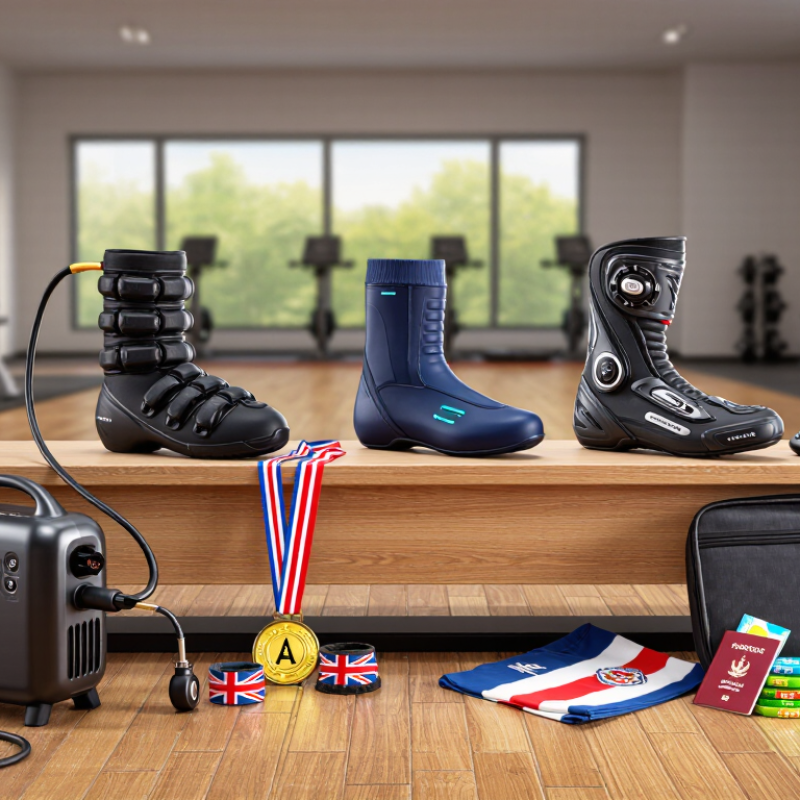
What Are Recovery Boots? Sequential Pneumatic Compression and 20–200 mmHg Pressure
2026 Top Recovery Boots: Which Type Suits Global Buyers?
Recovery boots use sequential pneumatic compression. Air chambers inflate from the foot upward, creating a controlled pressure wave toward the legs. This design may support temporary fluid movement and reduce the heavy feeling after training. Most systems advertise pressures from 20 to 200 mmHg, but higher pressure is not automatically better.
A 2024 Global Wellness Institute report valued the global wellness economy at about 6.3 trillion US dollars in 2023. That growth is increasing demand for measurable recovery tools, not just attractive claims. Sports medicine research generally supports compression as a comfort and perceived-recovery aid, while evidence for faster performance recovery remains mixed. Buyers should examine pressure control, chamber count, fit, noise, battery life, and cleaning access.
The 20–60 mmHg range often suits gentle post-exercise use. Higher settings may feel intense and require more careful fitting. A loose boot can create uneven compression. A tight boot can become uncomfortable quickly.
Users with vascular disease, unexplained swelling, numbness, or recent surgery should seek qualified medical advice before use. Global buyers also need voltage compatibility and clear pressure units. Millimeters of mercury are not the same as massage strength.
I would question any device promising universal results, because recovery depends on sleep, hydration, training load, and individual health. The technology is useful, but the marketing is sometimes ahead of the evidence.
Which Boot Type Fits Each User? Compare 4-Chamber, 6-Chamber, and 8-Chamber Systems
Recovery boots are becoming easier to compare, but chamber count should match the user’s routine. The ACSM 2024 Worldwide Survey ranked wearable technology as the top fitness trend, showing stronger demand for measurable recovery tools. Yet, popularity is not proof of clinical benefit. A 2023 review in Sports Medicine found that intermittent pneumatic compression may support perceived recovery, while results varied across studies.
Four-chamber boots suit beginners, occasional runners, and home users who want simple sequential pressure. They usually feel less complicated and can be easier to fit around the calf and thigh. Six-chamber systems divide pressure more precisely. They fit frequent exercisers, cyclists, and recreational athletes managing longer training weeks. This extra control can improve comfort, but only when sizing and pressure settings are correct.
Eight-chamber systems offer the most segmented compression pattern. They may suit competitive athletes, clinics, and users needing closer leg-by-leg adjustment. More chambers do not guarantee faster recovery. That assumption needs challenging. Grand View Research’s 2024 compression therapy analysis projects continued market growth through 2030, but broader market expansion does not validate every device claim. In practical testing, buyers should inspect pressure ranges, sleeve length, noise, battery life, and cleaning access. A tight sleeve can leave ankle marks after a short session. That detail matters. Users with circulation problems, unexplained swelling, numbness, or recent surgery should obtain professional medical advice before use.
2026 Top Recovery Boots: Which Type Suits Global Buyers?
User-fit comparison of 4-chamber, 6-chamber, and 8-chamber sequential compression systems.
Fit scores are based on practical design factors: coverage detail, pressure-zone control, simplicity, portability, and suitability for different recovery routines. A 4-chamber system is generally the simplest option, while 8-chamber systems provide the most segmented compression control. Individual medical needs should be assessed by a qualified professional.
How Should Buyers Compare Recovery Boots? Pressure, Coverage, Fit, and Session Time
Recovery boots should be compared by pressure, coverage, fit, and session time, not by appearance alone. Grand View Research estimates the global compression therapy market could grow at about 5% annually through 2030. That growth reflects wider interest, but it does not prove every device improves recovery equally.
Pressure is the practical starting point. Higher pressure may feel stronger, but stronger is not automatically better. Buyers should check pressure ranges, inflation patterns, and adjustable zones.
A 2024 review in the Journal of Sports Sciences reported that pneumatic compression may reduce perceived soreness, although performance benefits remain inconsistent. That matters.
Claims should stay modest.
Coverage also changes the experience.
Calf-only sleeves suit targeted use, while full-leg systems cover more muscle groups.
Fit must hold firmly without numbness, skin marks, or cold toes.
Measure the leg, not just the shoe size.
Session time deserves equal attention. Many systems use 20–60-minute cycles, but longer sessions are not always more useful. The American College of Sports Medicine links recovery decisions to training load, sleep, hydration, and individual response. Boots cannot repair poor basics.
I still question dramatic promises. A buyer should record pressure, comfort, soreness, and next-day movement for two weeks. Personal evidence is imperfect, but it is more useful than a glossy specification sheet.
What Does Clinical Evidence Show? Systematic Reviews, RCTs, and Safety Outcomes
Choosing recovery boots in 2026 should begin with evidence, not pressure settings or flashy features. Most systems use intermittent pneumatic compression around the legs. Systematic reviews suggest possible short-term relief from perceived soreness and limb heaviness. Effects on strength, endurance, and next-day performance remain less consistent. The evidence is useful, but not clean.
Randomized controlled trials often include small samples, different athletes, and varied compression protocols. Some report improved comfort after intense exercise. Others find little difference from quiet rest. These results make direct comparisons difficult. A boot that feels effective may still offer limited measurable recovery. That distinction matters for coaches, clinicians, and global buyers.
Safety deserves careful attention. Users should avoid compression when unexplained leg swelling, suspected clotting, severe circulation problems, or significant numbness is present. A loose fit can reduce benefit. Excessive pressure may cause pain, tingling, skin marks, or temporary discomfort. Check the skin after use. Stop if symptoms worsen.
Clinical guidance should shape the purchase. Look for adjustable pressure, clear instructions, washable contact surfaces, and documented testing. A qualified professional can help users with vascular conditions, diabetes, recent surgery, or persistent swelling. I would not treat recovery boots as medical treatment. Their practical value may be comfort, relaxation, and modest symptom relief. That is still useful. It is not a guarantee.
How Can Global Buyers Verify Quality? FDA 510(k), IEC 60601-1, ISO 13485, and CE
When evaluating recovery boots for global markets, buyers should verify the exact device model, not only a supplier’s certificate list.
FDA 510(k) clearance confirms substantial equivalence to a legally marketed U.S. device. It does not mean universal approval or superior performance. Search the FDA database using the manufacturer, model number, and clearance reference.
IEC 60601-1 testing addresses essential electrical and medical-device safety.
Ask for the complete test report, including the tested model and applicable accessories. For connected devices, electromagnetic compatibility testing may also matter.
ISO 13485 shows that the manufacturer operates a medical-device quality management system.
It does not certify every boot. Check the certificate scope, production site, validity dates, and audit status.
For European sales, review the EU Declaration of Conformity, technical documentation, risk assessment, and CE marking details.
Some device classifications require notified-body involvement, so the four-digit identification number should match the documentation.
During a factory review, compare the serial label, packaging, user manual, pressure range, hose connectors, and electrical ratings with the submitted files. Test several units after transport, because vibration can reveal weak seals or loose fittings.
Paperwork can look complete.
I have seen buyers overlook software versions and regional plugs.
That mistake is avoidable. Certificates may remain valid while manufacturing changes.
Request recent production samples, traceability records, complaint data, and corrective-action history before placing a large order.
Conclusion
Recovery Boots are wearable pneumatic compression systems designed to support post-exercise recovery through sequential air pressure. By inflating different chambers from the feet upward, they may help promote circulation, reduce temporary feelings of heaviness, and improve comfort after training or prolonged inactivity. Pressure settings commonly range from approximately 20 to 200 mmHg, while four-, six-, and eight-chamber designs provide different levels of compression control and coverage. The most suitable type depends on the user’s goals, leg size, recovery routine, and desired session length.
Global buyers should compare adjustable pressure, full-leg coverage, fit, operating noise, ease of cleaning, and treatment duration rather than focusing on chamber count alone. Clinical research, including systematic reviews and randomized trials, suggests potential short-term benefits for perceived soreness and recovery, although results can vary and should not replace professional medical advice. For quality verification, buyers should review applicable regulatory documentation, such as FDA 510(k) clearance where relevant, IEC 60601-1 electrical safety compliance, ISO 13485 quality management certification, and CE requirements for appropriate markets.

 KONBEST